
REITs Dividend Yield Comparison 2026: Top Picks for Investors
REITs Dividend Yield Comparison 2026: Top Picks for Investors
The real estate investment trust (REIT) sector continues to offer some of the most attractive dividend yields in the stock market. As we move through 2026, investors seeking reliable passive income streams are increasingly turning their attention to REIT dividend yield comparison strategies. Understanding which REITs deliver the best combination of yield, stability, and growth potential has become essential for building a successful income-focused portfolio.
Understanding REIT Dividend Yields in 2026
Real estate investment trusts operate under unique tax structures that require them to distribute at least 90% of their taxable income to shareholders as dividends. This requirement makes REITs an excellent source of passive income for investors who want regular cash flow from their investments. The average REIT dividend yield currently exceeds 4%, significantly higher than the S&P 500 average of approximately 1.5%.
How REIT Dividends Are Calculated
The dividend yield represents the annual dividend payment expressed as a percentage of the current stock price. For example, if a REIT trades at $25 per share and pays $2 in annual dividends, its yield stands at 8%. Stock price fluctuations directly impact yield calculations, meaning a rising share price can reduce your effective yield even if the dividend payment remains unchanged.
Key Metrics for Comparing REIT Dividend Yields
When evaluating REIT dividend yields, experienced investors examine several critical metrics. Funds from Operations (FFO) provides a clearer picture of operational performance than traditional earnings measures. The payout ratio from FFO indicates whether a dividend is sustainable. Additionally, dividend coverage ratios help determine if a REIT can maintain payments during economic downturns without cutting distributions to shareholders.
Top REIT Sectors for Dividend Investors in 2026
Industrial and Logistics REITs
Industrial REITs have demonstrated exceptional performance as e-commerce growth drives demand for warehouses and distribution centers. These properties typically feature long-term lease agreements with creditworthy tenants, providing stable cash flows. Many industrial REITs offer dividend yields between 3% and 5%, with strong potential for capital appreciation as logistics real estate values continue rising.
Data Center REITs
The explosive growth of cloud computing and artificial intelligence has created tremendous demand for data center infrastructure. Data center REITs benefit from long-term contracts, inflation-linked rent increases, and high barriers to entry. Yields in this sector generally range from 3% to 4.5%, with substantial growth prospects as digital infrastructure needs expand throughout 2026 and beyond.
Healthcare REITs
Healthcare REITs own portfolios of medical office buildings, senior living facilities, and hospital properties. These investments offer defensive characteristics because healthcare services remain essential regardless of economic conditions. Many healthcare REITs provide dividend yields between 4% and 6%, making them particularly attractive for income-focused investors seeking stability.
Residential REITs
Apartment and single-family rental REITs benefit from strong housing demand and the ongoing shift away from homeownership. Residential properties typically feature shorter lease terms, allowing landlords to adjust rents quickly in response to market conditions. Dividend yields in this sector range from 3% to 5%, with growth potential as housing affordability challenges persist.
Comparing REIT Dividend Yield Performance
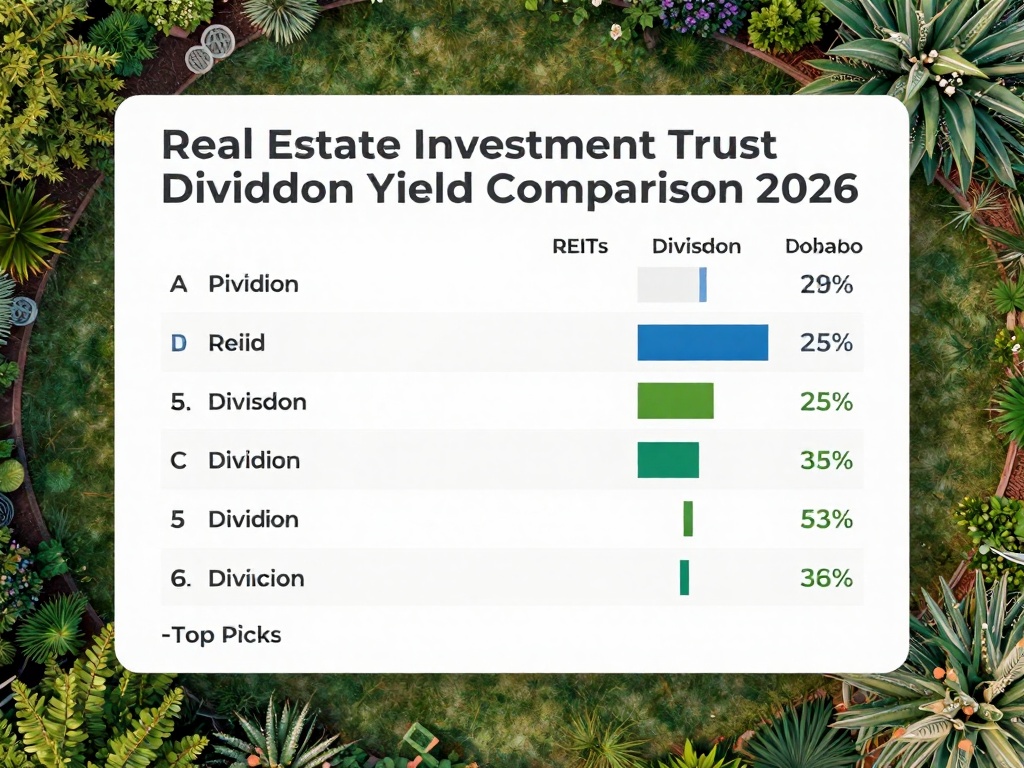
When conducting a thorough real estate investment trust dividend yield comparison for 2026, investors should evaluate both historical performance and forward-looking indicators. The following table summarizes key metrics across major REIT sectors:
- Industrial REITs: Average yield 3.8%, FFO payout ratio 55-65%, 5-year dividend growth 8%
- Data Center REITs: Average yield 3.5%, FFO payout ratio 50-60%, 5-year dividend growth 12%
- Healthcare REITs: Average yield 5.2%, FFO payout ratio 70-80%, 5-year dividend growth 4%
- Residential REITs: Average yield 4.1%, FFO payout ratio 60-70%, 5-year dividend growth 6%
- Retail REITs: Average yield 4.8%, FFO payout ratio 65-75%, 5-year dividend growth 3%
- Office REITs: Average yield 5.5%, FFO payout ratio 80-90%, 5-year dividend growth 1%
Strategies for Maximizing REIT Dividend Income
Diversification Across Property Types
Spreading investments across multiple REIT sectors helps reduce risk while capturing different yield opportunities. A diversified REIT portfolio might include allocations to industrial, residential, healthcare, and data center properties. This approach ensures that weakness in any single sector does not disproportionately impact your overall dividend income stream.
Reinvesting Dividends
Dividend reinvestment plans (DRIPs) allow you to automatically purchase additional REIT shares using your dividend payments. Over time, this strategy compounds your returns and accelerates portfolio growth. Many brokerages offer commission-free DRIP programs that make reinvesting both convenient and cost-effective for investors building long-term wealth.
Timing Your REIT Investments
Like all securities, REIT share prices fluctuate based on interest rate expectations, economic conditions, and market sentiment. Rising interest rates typically pressure REIT valuations, creating buying opportunities for long-term investors. Conversely, when rates decline, REITs often outperform as income investors seek yield. Maintaining a long-term perspective helps you avoid making emotional investment decisions.
Risks to Consider in REIT Investing
While REITs offer attractive yields, investors must understand the inherent risks involved in real estate investment. Interest rate sensitivity represents the primary concern, as higher rates increase borrowing costs and can reduce property values. Economic recessions may increase vacancy rates and tenant defaults, potentially threatening dividend sustainability.
Property-specific risks also affect individual REITs differently. Retail REITs continue facing challenges from e-commerce competition, while office REITs have experienced significant disruption from remote work trends. Conducting thorough research before investing helps you understand each REIT's specific risk factors and competitive positioning within its property sector.
Building Your REIT Income Portfolio for 2026
Creating an effective REIT dividend strategy requires balancing yield targets with risk management considerations. Conservative investors might prioritize healthcare and industrial REITs with established track records of consistent dividend payments. More aggressive investors could allocate portions of their portfolio to higher-yielding office or retail REITs where turnaround potential exists.
Consider consulting with a financial advisor to determine the optimal REIT allocation based on your age, risk tolerance, and income requirements. Many investors target a 10-15% allocation to REITs within their overall investment portfolio, using these securities to enhance income while maintaining appropriate diversification across asset classes.
FAQ: REIT Dividend Yield Questions Answered
What is a good dividend yield for REITs in 2026?
A good REIT dividend yield typically falls between 4% and 6% for most investors seeking sustainable income. Yields above 7% may indicate higher risk or distribution rates that cannot be maintained long-term. Always examine the payout ratio and FFO growth to determine if a high yield is sustainable.
How often do REIT dividends get paid?
Most REITs pay dividends quarterly, though some distribute monthly dividends to shareholders. Monthly payments can improve cash flow planning for retirees or investors relying on portfolio income. Check each REIT's specific distribution schedule before purchasing shares.
Are REIT dividends taxed as ordinary income?
Yes, REIT dividends are generally taxed as ordinary income rather than qualified dividends, which receive lower capital gains tax rates. This tax treatment makes REITs more suitable for tax-advantaged accounts like IRAs and 401(k)s when possible.
Which REIT sectors offer the highest dividend yields currently?
Office REITs and healthcare REITs currently offer some of the highest average yields, ranging from 5% to 6%. However, office REITs carry elevated risk due to structural challenges in commercial real estate. Healthcare REITs generally provide better risk-adjusted returns for income investors.
How do rising interest rates affect REIT dividend yields?
Rising interest rates typically pressure REIT valuations and can limit borrowing capacity for property acquisitions. However, REITs with variable-rate debt face immediate cost increases, while those with fixed-rate financing experience more gradual impacts. Quality REITs can often pass increased costs to tenants through rent escalations.
Should I prioritize REIT yield or growth potential?
Younger investors with longer time horizons might favor REITs with stronger growth prospects even if yields are slightly lower. Investors near or in retirement often prioritize higher current yields for immediate income needs. Many balanced approaches combine dividend growth REITs with higher-yielding established properties.
Making informed decisions through careful real estate investment trust dividend yield comparison positions you to achieve your income and growth objectives throughout 2026 and beyond.
0 Response to "REITs Dividend Yield Comparison 2026: Top Picks for Investors"
Post a Comment